


Let our team help you select the right product
Talk to our experts, we can help you meet your requirements and provide assistance for your next project.
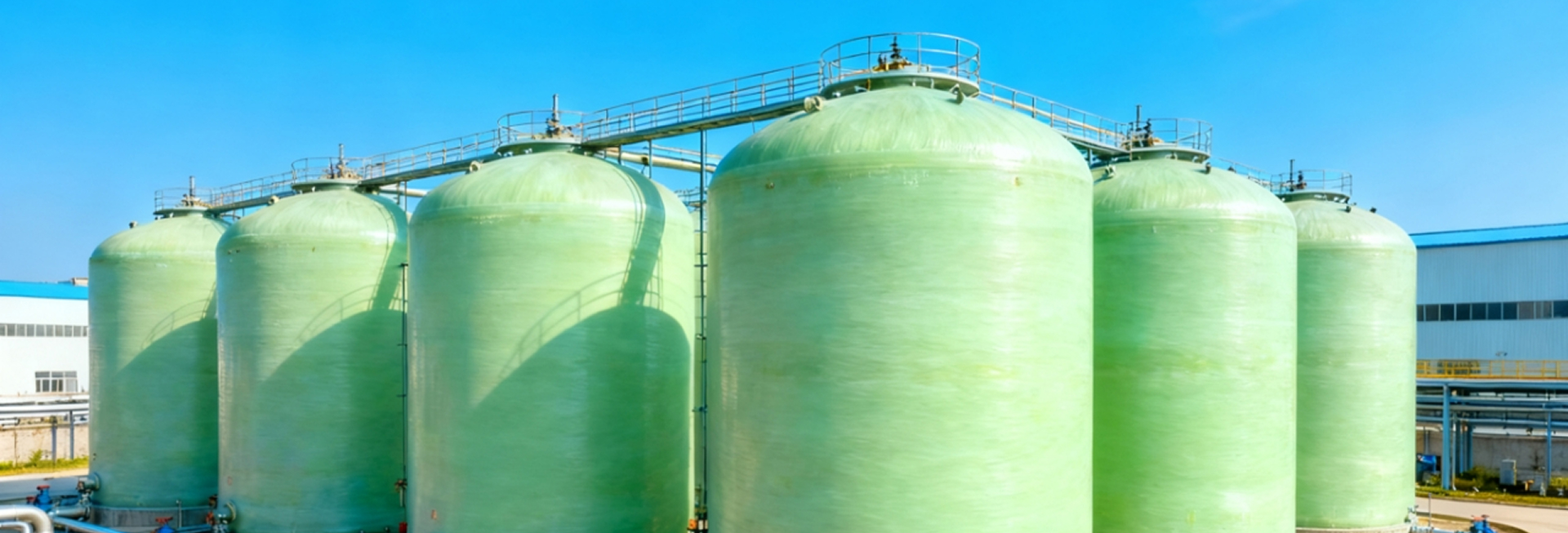
FRP PIPE FITTINGS, SPECIAL-SHAPED PARTS,PROFILES


Fiberglass tees and crosses are key fittings used in fiberglass piping systems to achieve fluid diversion or merging. Their design and manufacturing quality are crucial to the system's balance and stability. We provide standard and custom FRP tees and crosses tailored to your project requirements.
Products Description
Fiberglass tees and crosses, also known as FRP tees and FRP crosses, are essential pipe fittings used to divide, combine, or redirect fluid flow in industrial piping systems.
Manufactured from fiberglass-reinforced plastic (FRP), these fittings offer excellent corrosion resistance, high strength, and long service life, making them ideal for demanding environments such as chemical processing and wastewater treatment.
Fiberglass tees and crosses are key fittings used in fiberglass piping systems to achieve fluid diversion or merging. Their design and manufacturing quality are crucial to the system's balance and stability. We provide standard and custom FRP tees and crosses tailored to your project requirements.
✔ Excellent Corrosion Resistance
Resistant to acids, alkalis, and aggressive chemicals
✔ Lightweight Structure
Easy transportation and installation
✔ High Mechanical Strength
Maintains structural integrity under pressure
✔ Long Service Life (20+ Years)
Reduced maintenance costs
✔ Smooth Inner Surface
Improves flow efficiency and reduces scaling
This is the most common type, mainly divided into:
• Equal Diameter Tees: The main pipe and branch pipes have the same diameter.
Applications: Situations requiring even fluid diversion or branches with the same flow rate.
• Reducing Tees: The branch pipe's diameter is smaller than the main pipe's diameter.
Applications: Situations requiring a branch with a smaller flow rate from the main pipe.
• Oblique Tees: The connection between the branch pipe and the main pipe is not at a right angle, but at an acute angle (usually 45°).
Applications: This design significantly reduces fluid resistance, turbulence, and erosion, especially when conveying slurries containing solid particles; oblique tees should be preferred in these cases.
• Equal Diameter Crosses: All four ports have the same diameter.
• Reducing Crosses: One or more ports have a different diameter than the others.
• Special Cross Fittings: Custom angles and configurations
• Angled T-junction: Branching points are connected at an angle.
Applications: Used for more complex piping network layouts, requiring simultaneous bidirectional flow splitting or merging.

Technological Advantages
| Parameter | Specification |
|---|---|
| Diameter | DN15 – DN3000 |
| Type | Equal / Reducing |
| Pressure Rating | 0.6MPa – 2.5MPa |
| Temperature | ≤120°C |
| Material | Polyester / Vinyl Ester / Epoxy |
| Standard | ANSI / DIN / JIS |
Fiberglass tees and four-way fittings are the "crossroads" of piping systems, core components for complex fluid distribution. Their key technologies lie in:
* Scientifically designed opening reinforcement to address stress concentration.
* Optimized hydrodynamic profiles (e.g., using angled tees) to reduce energy consumption and wear.
* Reliable manufacturing processes (winding is superior to hand lay-up) to ensure structural integrity.
* Proper installation and support to balance internal stress.
When selecting and using them, they must be considered as pressure-bearing structures and fluid units, not just simple connectors, to ensure the efficient, safe, and long-term operation of the entire piping network.
Why Choose Us as Your FRP Pipe Fittings Supplier
✔ Professional FRP manufacturer
✔ Advanced molding & filament winding technology
✔ Strict quality inspection
✔ Export to 50+ countries
✔ Fast response within 24 hours
Send us your requirements and get:
Free technical consultation
Competitive pricing
Fast delivery

A fiberglass tee is a pipe fitting used to connect three pipes and allow flow distribution or combination.
A tee connects three pipes, while a cross connects four pipelines.
Yes, FRP fittings are highly durable and resistant to corrosion, with a long service life.
Yes, we provide full customization based on your project requirements or drawings.
Applications of FRP Pipe Tees & Crosses
◆ Chemical processing pipelines
◆ Wastewater treatment plants
◆ Seawater desalination systems
◆ Oil & gas transportation
◆ Power plants
◆ Industrial fluid handling systems
Our team will reply within 24 hours. Request a Quote Now!
Let our team help you select the right product
Talk to our experts, we can help you meet your requirements and provide assistance for your next project.