


Let our team help you select the right product
Talk to our experts, we can help you meet your requirements and provide assistance for your next project.
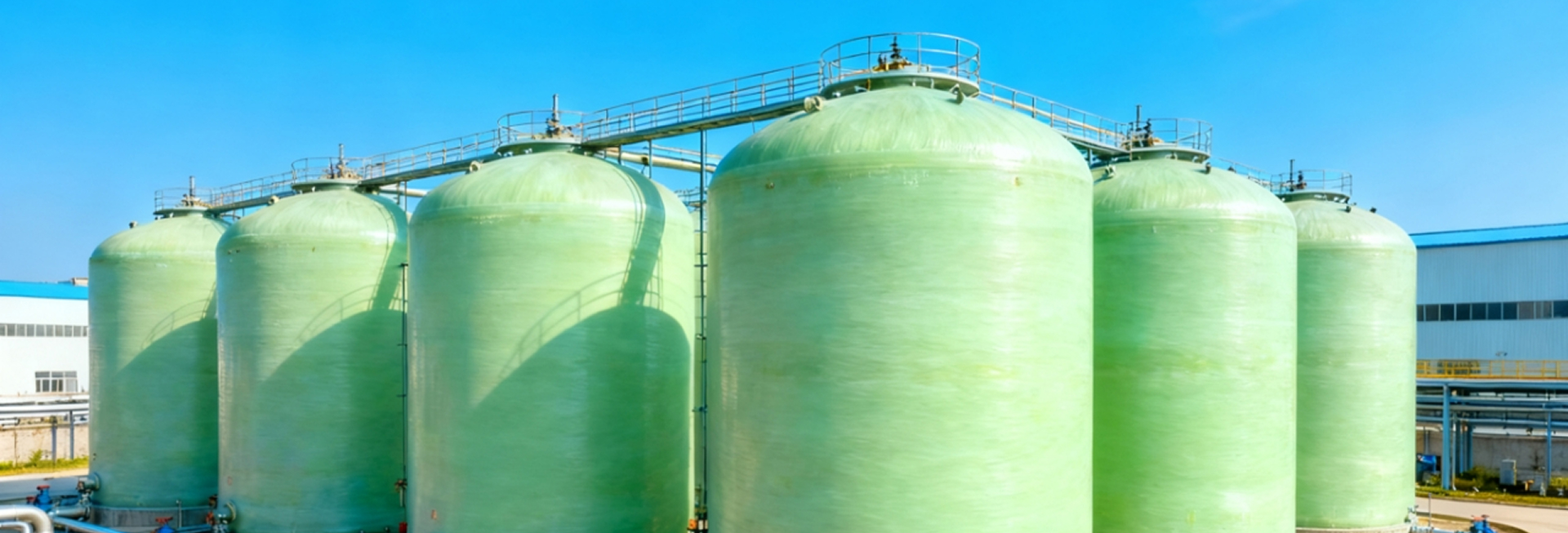
FRP PRODUCT MANUFACTURING EQUIPMENT


The production of fiberglass reducing products (such as reducing pipes, tapered covers, flared mouths, etc.) is a highly specialized field. These products cannot be produced using standard pultrusion processes, but instead rely on several specialized equipment and processes.
Fiberglass Variable Diameter Product Production Equipment
Fiberglass variable diameter product production equipment is a specialized category of FRP Product Manufacturing Equipment designed to manufacture non-constant cross-section components such as reducers, tapered covers, flared ducts, and conical towers. Unlike standard pipe winding or pultrusion lines that produce uniform diameters, this equipment handles gradual or step changes in diameter along a single part. The machinery ranges from contour-arm winding machines and centrifugal casters to vacuum infusion systems, each suited to different shapes, volumes, and precision requirements. For manufacturers needing to produce transition pieces between pipes of different sizes or custom tapered structures, this equipment is essential.

This is the most commonly used and efficient equipment for producing fixed-length and rotary reducing products (such as pipe reducers).
Equipment principle : The machine integrates turning and winding functions. A contour arm (or CNC axis) drives resin and fiberglass guide wheels to reciprocate along a rotating variable-diameter mandrel .
Work style :
prefabricated variable diameter mandrel onto the main shaft of the equipment.
The spindle drives the core mold to rotate.
The contour arm precisely controls the distance between the guide wire head and the mandrel surface according to the diameter change of the mandrel, so as to achieve circling and spiral winding .
By adjusting the fiber angle and winding pattern, the strength and stiffness requirements of the product at different diameters can be met.
Advantages : High degree of automation, stable product quality, uniform fiber tension, and strong designability of strength.
Applicable products : reducing pipes/fittings of various specifications , rocket engine covers, conical towers, etc.
It is mainly used to produce reducing pipes with extremely smooth inner surfaces .
Equipment principle : A mixture of resin and chopped glass fiber is sprayed into a rotating variable diameter mold . Under the action of centrifugal force, the material is pressed tightly against the inner wall of the mold and air bubbles are expelled, thereby forming a dense and smooth inner surface.
Advantages : The inner surface is smooth as a mirror, with excellent hydraulic performance; the product has good density and strong anti-leakage properties.
Disadvantages : High equipment investment and high mold costs, generally more suitable for mass production.
Applicable products : Drainage pipes and ventilation pipes with high requirements for smooth inner wall.
This is the most advanced technology for producing infinitely long reducers ; the equipment is extremely complex and expensive.
Equipment principle : By dynamically adjusting the radial position of multiple winding units on the winding ring, the winding diameter is changed in real time on the continuously advancing tube blank, thereby realizing the continuous change of tube diameter.
Advantages : It can continuously produce reducing pipes just like producing equal-diameter pipes, with extremely high efficiency.
Disadvantages : The technology threshold is extremely high, the equipment is extremely expensive, and it is only mastered by a few top companies.
Applicable products : Large-diameter variable diameter pipes for ultra-long-distance transportation.
Auxiliary production equipment and manual crafts
For small-batch, large-size, or very uniquely shaped variable-diameter products, the following semi-mechanized or manual processes are still indispensable:
This is a very flexible approach that is suitable for large, non- standard variable diameter products.
Required equipment :
Vacuum pump : The core component, which generates negative pressure.
Resin drainage tube, vacuum bag film : sealing system.
Guide net and release cloth : auxiliary materials.
Process :
on the variable diameter mold .
It is completely sealed with a vacuum bag film.
Start the vacuum pump to draw in the resin under negative pressure and completely impregnate the fiber.
Advantages : Relatively low mold cost, smooth product on both sides, high fiber content, and environmentally friendly.
Applicable products : large variable diameter covers (such as fan covers), ship hulls, and irregularly shaped variable diameter parts.
The most basic and flexible method, suitable for samples, small batches or giant products .
Required equipment : Very simple, mainly rollers, brushes, resin mixing containers , etc.
Process : Workers manually lay fiber cloth on the reducing mold and apply resin with a roller, layer by layer.
Advantages : Almost unrestricted by product shape and size, with extremely low initial investment.
Disadvantages : Quality is highly dependent on worker skills, resulting in low efficiency, high labor intensity, harmful health effects from resin volatilization, and poor product quality consistency.
Piping Systems: Reducers and expanding joints in chemical, water, and desalination plants.
Aerospace & Defense: Rocket motor casings, nose cones, and missile launcher tubes.
Power Generation: Wind turbine nacelle covers, flared cooling tower stacks.
Industrial Ventilation: Tapered hoods and transition ducts for corrosive fume exhaust.
Marine: Boat hulls, tapered masts, and exhaust stack casings.
Infrastructure: Flared culvert ends, tapered lighting poles, and bridge drainage transitions.
Regardless of the process used, the variable diameter mold is one of the most crucial pieces of "equipment".
Fiberglass molds : the most commonly used type, with moderate cost, suitable for small to medium batch production and large-scale products. High precision is required in their manufacture.
Metal molds (steel/aluminum) : used for centrifugal casting, molding or high-performance winding, with high precision and long service life, but also high cost.
Wooden molds/plaster molds : These are usually used as transitional master molds for making fiberglass molds , for single-piece or prototype production.
Lack of Standardized Tapered Parts: Off-the-shelf reducers often come only in limited angles and sizes. Custom equipment allows any taper ratio needed.
Stress Concentration at Pipe Diameter Changes: Abrupt transitions create weak points. Tapered windings distribute stress smoothly, eliminating failure zones.
Difficulty Joining Different Pipe Sizes: Field fabrication of adapters is labor-intensive and unreliable. In-house production delivers precise, repeatable transition pieces.
High Cost of Metal Tapered Fabrications: Steel or stainless reducers require expensive rolling, welding, and finishing. FRP equipment produces corrosion-free parts in one operation.
Prototype or Small-Batch Constraints: Hand lay-up equipment allows one-off large tapered parts without expensive metal tooling.
20+ years of FRP manufacturing – Pipezy understands variable-diameter part production from hands-on experience.
Custom equipment design – winding machines, mandrels, and vacuum systems tailored to your specific taper profiles and volumes.
Complete solutions – from contour-arm winders to centrifugal casters and hand lay-up tooling.
Mold making expertise – guidance on metal, FRP, or temporary mold selection and fabrication.
Reliable after-sales – remote support, operator training, and optional on-site commissioning.
ISO 9001 & CE options – with full documentation. Pipezy delivers equipment that actually works for reducers, cones, and custom tapered parts.
Let our team help you select the right product
Talk to our experts, we can help you meet your requirements and provide assistance for your next project.