


Let our team help you select the right product
Talk to our experts, we can help you meet your requirements and provide assistance for your next project.
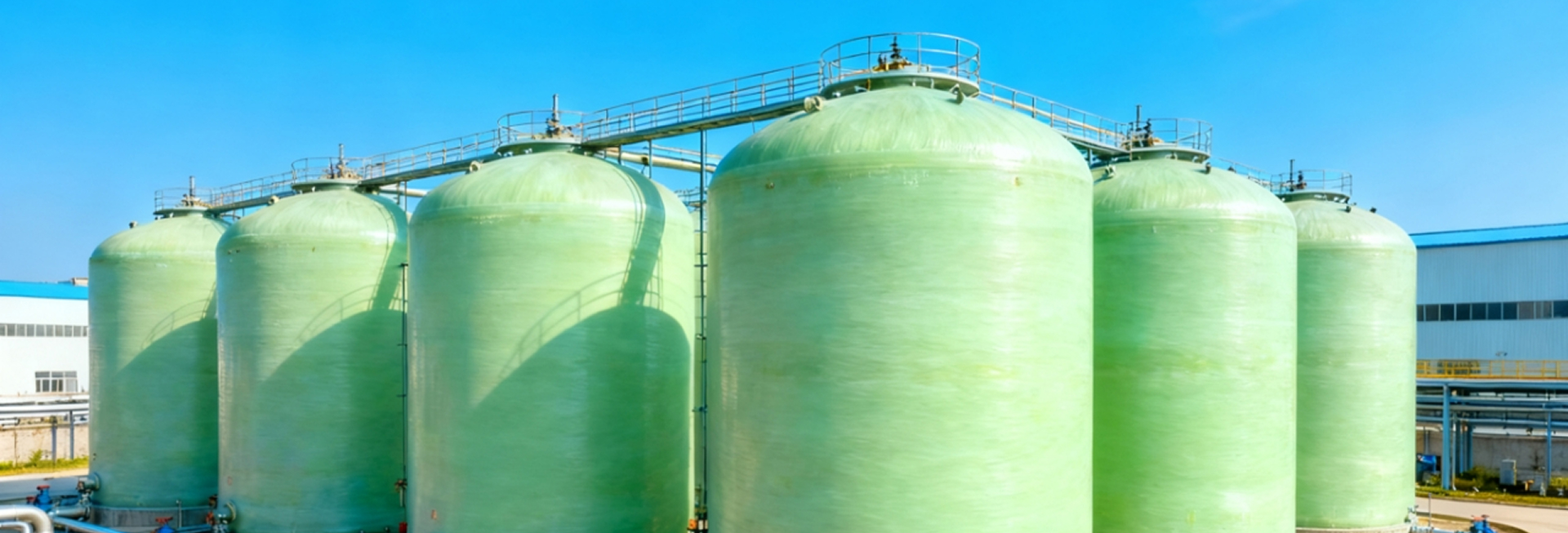
FRP TANK


This is a modern, integrated sewage/rainwater lifting device that is rapidly replacing traditional concrete pumping stations and becoming the mainstream choice in municipal, construction, and industrial fields.
Products Description
This is a modern, integrated sewage/rainwater lifting device that is rapidly replacing traditional concrete pumping stations and becoming the mainstream choice in municipal, construction, and industrial fields.
I. Core Definitions and Working Principles
A fiberglass integrated prefabricated pumping station is a complete set of equipment that is pre-designed, manufactured and assembled in a factory. Its cylinder is made of fiberglass (GRP) winding and integrates water pumps, pipes, valves, control systems, gratings and maintenance platforms, etc., and then the whole unit is transported to the site for installation.
Second, its core working principle is: automatic collection and enhancement.
1. Wastewater collection : Wastewater/rainwater from municipal pipe networks, buildings or factories flows by gravity into the fiberglass cylinder of the pumping station through the inlet pipe.
2. Liquid level control : Liquid level sensors (such as floats and pressure sensors) inside the cylinder monitor the water level in real time.
3. Automatic pump start : When the water level rises to the set start water level, the control system will automatically start one or more submersible pumps.
4. Pressurized transport : The water pump lifts the sewage through pressurized pipelines and outlet valves to a higher elevation or a more distant municipal pipe network.
5. Automatic stop : When the water level drops to the set stop level, the water pump will automatically stop running.
6. Cyclic backup : The system is usually equipped with multiple water pumps, which work in turn or run simultaneously, serving as backups for each other to ensure reliability.
III. Why is fiberglass commonly used for pump station cylinders?
This is determined by the perfect match between the material properties of fiberglass and the application requirements of pumping stations:
1. Excellent corrosion resistance
Sewage, rainwater, and their various chemical components (such as hydrogen sulfide and acidic substances) are highly corrosive to concrete and metals. Fiberglass, however, is naturally immune to these corrosives and has an extremely long service life.
2. Leak-proof and environmentally friendly.
The fiberglass cylinder is integrally wound and formed without seams , fundamentally eliminating leakage problems. In contrast, concrete pump stations are prone to cracking, which can cause sewage to seep into the ground, polluting the soil and groundwater.
3. High strength, lightweight .
Fiberglass has high strength and can withstand soil pressure and dynamic ground loads. At the same time, its weight is only 1/4 that of concrete, making transportation and hoisting very convenient , significantly reducing installation costs and difficulty.
4. Smooth inner wall, good self-cleaning properties
The inner wall of fiberglass is very smooth with an extremely low roughness coefficient (n<0.01), resulting in low water flow resistance and making it less prone to scale buildup, effectively preventing dirt deposition and clogging.
5. Flexible design and highly customizable
The cylinder diameter, height, and internal configuration can be flexibly customized according to the project's required flow rate, head, and site conditions.
IV. Main Structure and Components
A complete fiberglass integrated prefabricated pumping station includes:
1. Fiberglass cylinder : The core container, providing structural strength and corrosion protection.
2. Submersible sewage pump : The core power source, usually 1-3 units, installed in the pump pit or with its own guide rail system for easy maintenance.
3. Lifting rail system : Allows the water pump to be easily lifted to the surface for maintenance along the rails without the need for personnel to go down into the well.
4. Pressure piping system : including outlet pipe, check valve, gate valve, etc., usually made of stainless steel.
5. Intelligent Control System :
Control cabinet : Usually installed outdoors or on the ground, containing a PLC to achieve fully automatic operation, remote monitoring and fault alarm.
Liquid level sensor : Precisely controls the start and stop of the water pump.
6. Crushing type grid/basket grid : Used to trap and crush solid debris (such as fibers and plastics) to prevent water pump blockage.
7. Ventilation system : Expels harmful gases from inside the cylinder.
8. Bottom self-cleaning design : Many products adopt a bottom anti-sludge design (such as a concave bottom), which uses the impact force of the water pump to automatically agitate the sediment and prevent sludge from caking.
V. Main Application Areas
Municipal sewage lifting : Used in areas with low elevations where gravity cannot flow into the main sewage network.
Rainwater flood control and drainage : As a rainwater booster pumping station, it quickly removes accumulated water from urban areas.
Building water supply and drainage : collection and lifting of domestic sewage from villa areas, residential communities, hospitals, hotels, etc.
Industrial wastewater treatment : collection and transportation of corrosive industrial wastewater within factories.
Farmland irrigation : Water is drawn from reservoirs and rivers and transported under pressure.
Treatment of polluted water bodies : As an intercepting pump station, it intercepts and transports polluted water to the treatment plant.
VI. Comparison with traditional concrete pumping stations
| characteristic | Fiberglass integrated prefabricated pump station | Traditional concrete pumping station |
| Material | Fiberglass Reinforced Plastic (GRP) | reinforced concrete |
| Corrosion resistance | Excellent | Poor quality, requires internal corrosion protection. |
| Leakage prevention | Okay, no leakage overall. | Poor quality, prone to cracking and leakage. |
| Construction period | Short (1-2 weeks) | Long (2-3 months) |
| Area | Small | big |
| Installation difficulty | Simple, just hoist it in place. | Complex, on-site pouring |
| Intelligent | High, standard configuration | Low, requires additional configuration |
| Maintenance costs | Low | high |
| Comprehensive cost | Initial investment may be slightly higher, but the total lifecycle cost is low. | Initial investment may be low, but maintenance and repair costs are high. |
Summarize
Precast fiberglass integrated pumping stations represent the future direction of drainage technology. Leveraging the superior performance of fiberglass materials and the integrated, intelligent concept of factory prefabrication , they perfectly solve the pain points of traditional pumping stations , such as corrosion, leakage, slow construction, difficult maintenance, and large footprint . It is not merely a product, but a plug-and-play, highly efficient, and reliable drainage solution , providing strong support for modern urban construction and environmental protection.
Let our team help you select the right product
Talk to our experts, we can help you meet your requirements and provide assistance for your next project.